Maintaining a clean and hygienic living environment for the public is another key responsibility of the Department. The range of services includes street cleansing; waste collection; management of public toilets, public markets, cemeteries, crematoria and columbaria; and hawker management.
Tackling Hygiene Black Spots
The Government Programme on Tackling Hygiene Black Spots, led by the Deputy Chief Secretary for Administration, was launched in August 2022. Various departments have been working together to tackle hygiene black spots across the territory. About 730 hygiene black spots were identified in phases, of which about 240 under FEHD's purview were mainly located on streets or in rear lanes. With concerted efforts of relevant departments, over 90% of these more than 730 blackspots had shown significant improvement in hygiene conditions, surpassing the key performance indicator (KPI) set by the Chief Executive in the 2022 Policy Address, to eliminate at least 75% of the blackspots by the end of 2023. The Department will continue to improve and monitor the situation of the black spots.
Enforcing Public Cleansing Legislations
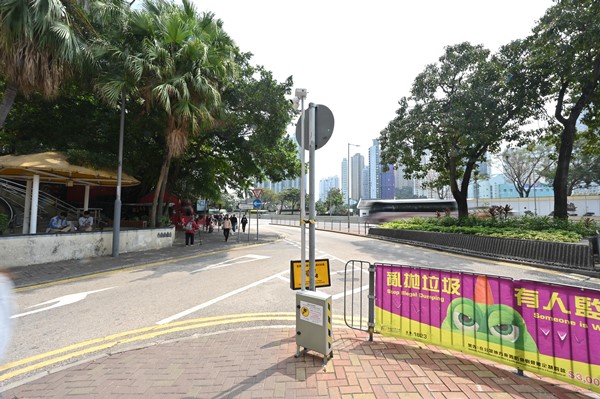
To address the environmental hygiene problems caused by frequent dumping of refuse at illegal refuse deposit black spots, the Department has installed Internet Protocol (IP) cameras at around 470 such black spots to combat illegal deposits of refuse and improve environmental hygiene. The Department will closely monitor the targeted black spots and suitably adjust its action plans in light of actual circumstances, including the relocation of IP camera in a timely manner, so as to enhance the effectiveness of enforcement actions.
In addition, the Department had established 46 dedicated enforcement teams to tackle violations of public cleanliness offences. These teams focus on strengthening enforcement efforts at black spots across districts where public cleanliness offenses frequently occur, make use of footage of IP cameras to investigate cases and develop strategies for operations, and also distribute leaflets and warning notices to deliver health messages to the public.
IP camera
Street Cleansing
The Department and its cleansing contractors have a combined workforce of about 13,400 engaged in the provision of public cleansing services, including street sweeping and washing, gully emptying, waste collection, and management of public toilets and refuse collection points. About 82% of the Department's street cleansing services have been outsourced. A monitoring and sanction mechanism is in place to ensure that contractors deliver satisfactory services.
Street sweeping is essential to keeping the city clean. All streets are swept manually from one to four times a day, tailored to the specific need of the areas. Streets in highly pedestrianised areas or popular tourist spots may be swept up to eight times a day.
In addition to manual sweeping, mechanical sweepers are used to sweep high speed roads and flyovers. Special cleansing squads operate on a need basis to tackle refuse deposit black spots. Lorries are deployed to remove large abandoned articles and bulky waste that cannot be handled by street sweepers. The squads also undertake urgent clearance operations in the event of traffic accidents.
Roadside gullies are cleared manually once every two to four weeks. Gully traps on high speed roads and flyovers are cleared once every six weeks by mechanical gully emptiers after midnight when traffic is light.
A total of about 11,100 litter containers are located at public places including bus stops, major road junctions and public transport interchanges to collect litter from pedestrians. They are emptied at a frequency of one to eight times daily, depending on the need of the areas. The Department also provides some 430 dog latrines and 1,900 dog excreta collection bins.
Regular street washing is carried out by the Department in public places, including pavements, lanes, hawker concentrated areas and hygiene blackspots. A total of 121 street washing teams from the Department's in-house staff and street cleansing contractors provide day and night street washing services at a frequency ranging from on a need basis to daily, depending on the need of the areas. The Department has applied pressure washer surface cleaners to remove stubborn stains on pavements speedily. For trunk roads with heavy traffic where normal washing is not practicable, flushing is done during non-peak hours.
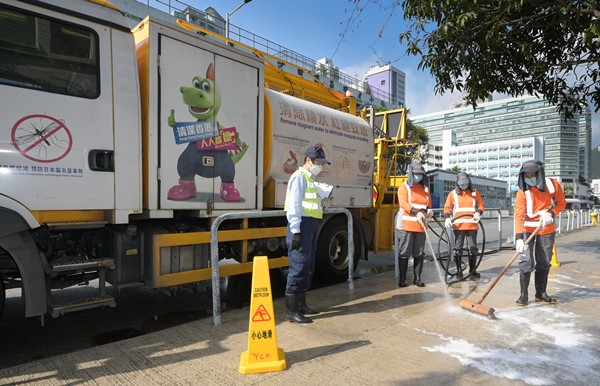
Territory-wide Year-end Clean-up Campaign 2024 is conducted to step up the cleansing of FEHD venues and public place.
Refuse Collection
There are 3,397 refuse collection points (RCPs) in Hong Kong. These include 163 permanent off-street RCPs, nine temporary RCPs, 907 village-type RCPs or RCPs with temporary structures, and 2,318 bin sites. About 5,770 tonnes of household and street waste is collected daily and delivered to refuse transfer stations or landfills. The Department has outsourced about 80% of its refuse collection services. A monitoring and sanction mechanism is in place to ensure that waste collection contractors deliver satisfactory services.
To improve the efficacy of refuse collection service and environmental hygiene in rural areas, the Department has been actively renewing and deploying waste collection facilities, including solar-powered aluminium RCPs with automated functions, solar-powered refuse compactors and compacting refuse bins at existing service locations.
As part of the continuing efforts to improve Hong Kong's living environment, the Department will continue to build new off-street refuse collection points (RCPs) in enclosed buildings equipped with modern facilities.
A new permanent RCP at Hung Yuen Road, Yuen Long was commissioned in late December 2024 to replace a village-type RCP at Hung Tai Road. In June 2023, the Department commenced construction works for another new permanent RCP at On Yu Road, Anderson Road Quarry Development, which are expected to be completed by end-2025.
Public Toilets Cleansing
The Department manages a total of 811 public toilets - 90 on Hong Kong Island, 62 in Kowloon, and 659 in the New Territories. In addition, there are 29 aqua privies in the New Territories.
To maintain the cleanliness of public toilets, the Department arranged toilet attendant services in high-traffic areas and tourist spots to provide immediate cleansing services, in addition to regular deep cleansing. The "Smart Public Toilet System" developed by the Department in collaboration with the Electrical and Mechanical Services Department has been integrated into 14 public toilets as trial.
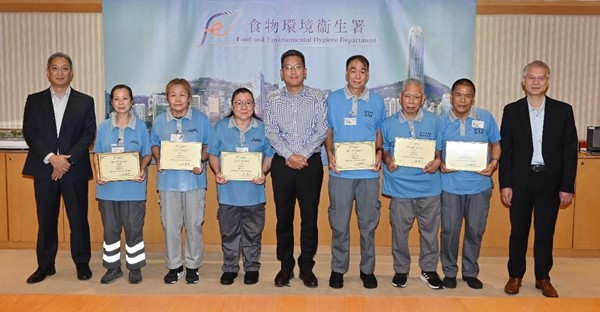
The Department held Best Toilet Attendant Award Ceremony on November 4 to recognise the outstanding toilet attendants' contributions.
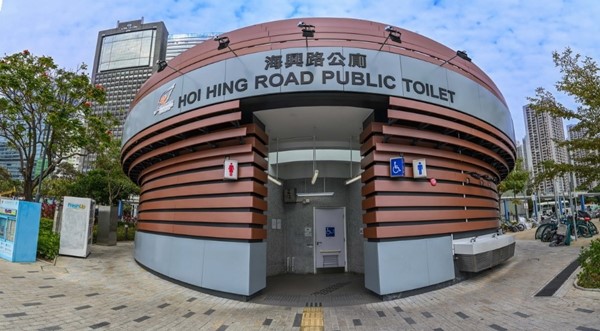
The Department won consecutive gold and silver awards in the annual Hong Kong's Best Public Toilet Award organised by the Hong Kong Toilet Association on November 19.
The Department has adopted innovative air purification technology in some public toilets, using catalytic chemical reactions to efficiently decompose air pollutants and odor molecules, thereby eliminating odors. About 70 public toilets are equipped with such air purification systems.
The Department continues to make good use of technology and has installed and tested the "Nanobubble Ozone Generation System" to reduce odour in four public toilets, and studied the use of motion sensor to detect fall down and non-movement of users in accessible unisex toilets.
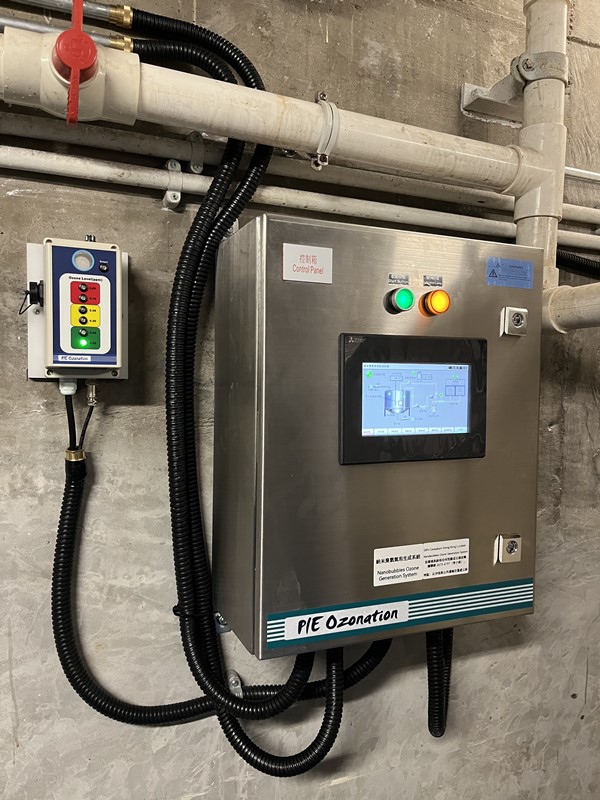
Nanobubble Ozone Generation System
As promulgated in the 2019-20 Budget, the Government has allocated about $600 million to carry out refurbishment or facelifting works for about 240 public toilets (PTs) of the Department in phases from 2019-20 to 2023-24 under the Enhanced Public Toilet Refurbishment Programme (EPTRP). The projects would improve toilet facilities and enhance their cleanliness and hygiene condition. The number of PTs to be refurbished annually has substantially increased since then. In 2024, 27 public toilets were refurbished or facelifted, including two public toilets at major tourist spots. To expedite the completion of projects under the EPTRP and to start the planning work for the next stage, the Government announced in the 2022 Policy Address that refurbishment projects of about 430 PTs would be rolled out progressively from 2024 to 2028. As at 31 December 2024, refurbishment or facelifting of 331 PTs is in progress or being planned.
Sanitary Nuisances
The Department deals with environmental nuisances, including those caused by dripping air-conditioners and accumulation of refuse, and has set up the Joint Office (JO) with the Buildings Department to handle water seepage cases. In 2024, the Department handled about 34,700, 7,800 and 47,300 related complaint cases respectively. Advisory letters and statutory Nuisance Notices were issued to ensure abatement.
To effectively promote knowledge about water seepage in buildings, the Customer Service Team under the JO conducted a total of 151 educational and promotional activities in various districts for members of the public and property management companies during the year. These activities included setting up promotion booths and conducting seminars to arouse greater public awareness of water seepage matters, clarify maintenance and management responsibilities for related property owners, and highlight the government's work in dealing with water seepage in buildings.
The Department implemented the simplified "Scheme of Participation by Property Management Agents in Tackling Water Seepage in Residential Buildings " in private housing estates on 1 July 2022. Under this initiative, staff members of participating property management companies are tasked with identifying the sources of water seepage in building units and facilitating the resolution process by coordinating and advising residents, either through mediation or civil means. In 2024, 94 participating property management companies had received over 2,700 cases of water seepage of which more than 1,900 cases had been successfully resolved through coordination, mediation, improvement works, or repairs to common areas within the housing estates.
The nuisance caused by dripping air-conditioners happens mainly in the summer months. To cope with the substantial increase in workload during that period, the Department has recruited dedicated teams of contract staff since 2017 to step up inspection, advising and education, as well as to take law enforcement actions, focusing on buildings where the problem of dripping air-conditioners is serious. As at 2024, this Department had set up nine such dedicated teams in order to tackle the problem of dripping air-conditioners more effectively.
Hawker Management
It has been the standing policy of the Administration to satisfactorily regulate licensed hawking activities and take enforcement action against illegal hawkers. Apart from the sale of cooked food or restricted food without a licence, or conducting hawking activities in main thoroughfares, areas where there are high pedestrian flow or places where there are repeated complaints against which enforcement action is taken in accordance with the law, enforcement staff generally adopt a "warning first, followed by prosecution" strategy. The Department will continue with the above strategy in monitoring on-street hawking activities.
As at the end of 2024, there were 4,848 hawkers carrying out business in licensed fixed-pitch stalls and 233 licensed itinerant hawkers.
The management and control of hawkers is the responsibility of about 2,400 trained staff who are assigned to 171 squads of the hawker control team.
Hawker control staff inspect fixed hawker pitches regularly and regulate the operation of itinerant hawkers to ensure that licensing conditions and relevant legal provisions are observed. They also take enforcement action to prevent irregularities caused by licensed or illegal hawkers. There were 5,025 convictions for offences related to hawking in 2024.
Shop Front Extension Problem
Illegal extension of business from shops is a street management issue which cuts across the purview of a number of government departments which have their respective roles to play. The Department accords priority to enforcement against cases causing obstruction to scavenging operations or cases relating to illegal hawking or unauthorised extension of food business, and is also committed to participating in inter-departmental efforts to tackle the shop front extension problem. In 2024, 1,272 prosecutions and 1,290 fixed penalty notices were instituted against shop front extensions respectively.
In order to tackle obstruction problem in public place caused by shop front extension more effectively, the Department and the Police adopted a new enforcement strategy. Apart from stepping up prosecution against the shop offenders, the Department would remove the obstructions if they are not removed within the time limit as specified by the Police. This will impose a higher cost on non-compliance to the shop operators for causing obstructions on the streets, thereby achieving a greater deterrent effect. In 2024, the Department and the Police mounted a total of 1,688 new mode of joint enforcement operations, and the shop front extension problem in many districts have improved remarkably.
After the amendment to Fixed Penalty (Public Cleanliness and Obstruction) Ordinance (Cap. 570) in 2023, the fixed penalty for shop front extension offences has been raised from $1,500 to $6,000.
Lunar New Year Fairs
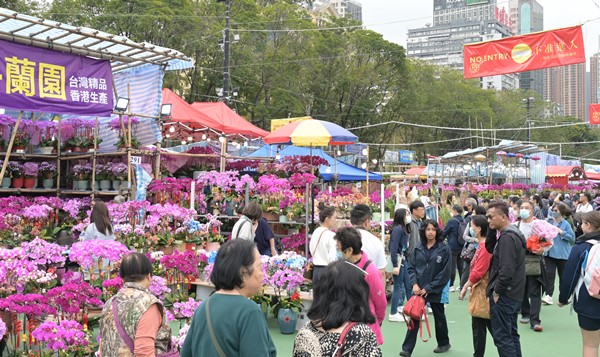
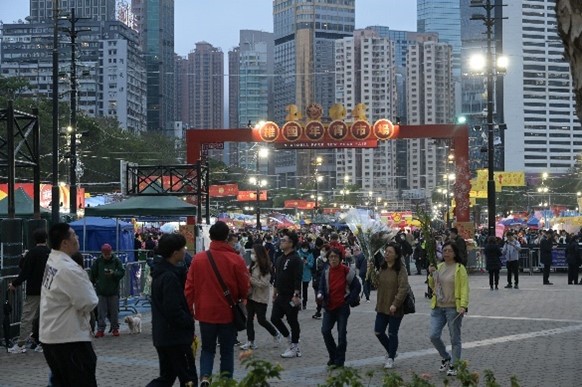
In 2024, the Department organised 15 Lunar New Year Fairs in 13 districts from 4 to 10 February, the Che Kung Festival Fair in Sha Tin from 7 to 24 February, and the Lam Tsuen Fong Ma Po Fair in Tai Po from 10 to 24 February. There were about 910 stalls offering seasonal flowers and plants. The Fairs provided venues for the public to purchase festive flowers to welcome the Lunar New Year.
Public Markets and Cooked Food Venues
The Department is in charge of 74 wet markets, with about 12,500 stalls offering commodities ranging from fresh food to household items, and about 930 stalls in 38 cooked food centres and 22 free-standing cooked food markets. As of end-2024, 11,147 stalls were leased out, 1,209 stalls were vacant, and 1,178 stalls were frozen for designated purposes such as re-siting and renovation. Stalls are normally leased through auction.
In 2024, the Department conducted promotional activities to enhance patronage of public markets, including decorations and celebration activities during key festivals as well as organising game booths and workshops and redemption of souvenirs.
Health inspectorate officers and market staff undertake regular checks to ensure that stall operators observe the law, the codes of hygiene practices and tenancy conditions. In 2024, 649 prosecutions were instituted against market stall operators for breach of statutory provisions.
In order to foster clean markets, the Department's market service contractors have increased the frequency of market cleansing operations from July 2023. The Department also addresses irregularities caused by stallholders in a phased manner. The first phase priority is to handle severe irregularities (including the illegal occupation of the communal areas, obstructing the barrier-free facilities and disruption of the normal use of public facilities) and/ or fire safety issues. In 2024, 336 verbal warnings, 97 warning letters and 636 summonses were instituted against severe irregularities. In addition, the Department is conducting facelifting works of about 40 toilets (each comprising male, female and or accessible unisex toilets) in about 30 public markets and cooked food markets from 2024-25 to 2025-26.
The Government is taking forward a number of new public market projects, including construction of new markets in Tin Shui Wai, Tseung Kwan O and Kwu Tung North New Development Area.
The Department is taking forward the implementation of the Market Modernisation Programme (MMP). Lai Wan Market officially re-opened in March 2024 after undergoing an overhaul. Meanwhile, the Department is implementing market stall enhancement projects under the MMP. Queen Street Cooked Food Market, the pilot project, officially resumed full operation in September 2024. In addition, the Department has carried out minor refurbishment or improvement works in 16 markets, of which 14 have been completed.
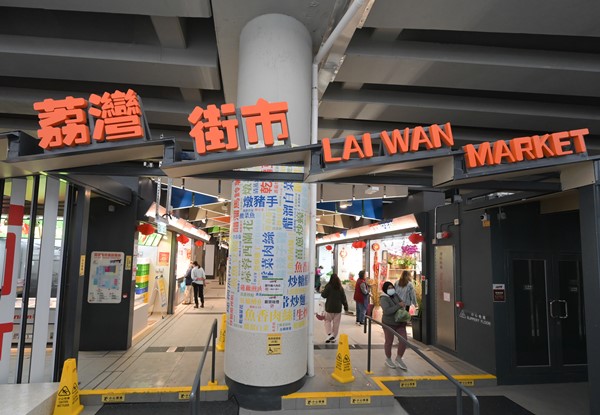
Lai Wan Market commenced operation in phases on February 2 after an overhaul under the Market Modernisation Programme.
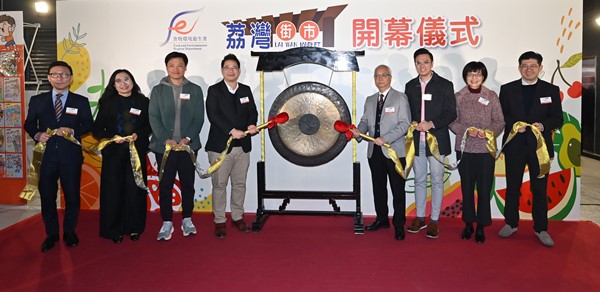
The opening ceremony of the overhauled Lai Wan Market was held on March 1, which marks the official reopening of the market.
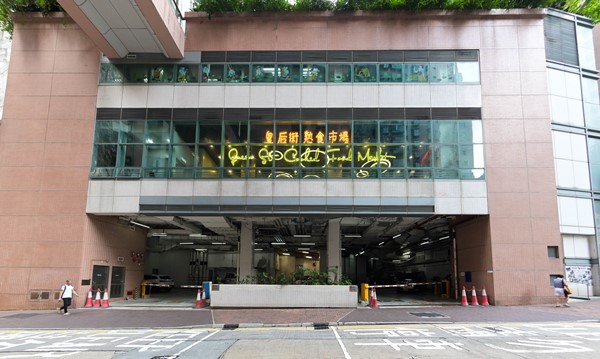
Queen Street Cooked Food Market, which is a pilot stall enhancement project under the Market Modernisation Programme, officially resumed full operation on September 12.
Looking ahead, the Department will continue to take forward MMP projects, including planning for the market stall enhancement projects at Ap Lei Chau Market Cooked Food Centre, Luen Wo Hui Market Cooked Food Centre and Yue Wan Market (including Cooked Food Centre).
Besides, the Government has been taking forward measures to improve the operating environment of public markets, including replacement of aged lifts and escalators, improvement of ventilation, lighting systems and fire service equipment, refurbishment of external walls and toilets, etc. as appropriate. We have earmarked $587 million to replace, in phases, 79 lifts and 167 escalators in 40 public markets.
Pest Control
The Department is the Government's adviser on pest control matters, and is responsible for handling problems of pests affecting public health. In meeting this goal, the Department adopts a multi-pronged approach, putting equal emphasis on the continuous improvements in environmental hygiene and effective use of pesticides. It regularly updates its control methodologies and technologies, making reference to the latest recommendations of the World Health Organisation. The Department works closely with the pest control trade, and exchanges views with them, in order to uphold the professional standards of pest control practices.
Risk Assessment and Surveillance of Mosquitoes
The Department has set up Gravitraps in 64 survey areas across the territory. The Gravidtrap Index (i.e. the percentage of locations with activity of Aedes albopictus detected) and the Density Index (i.e. the average number of Aedes albopictus adult found in each positive Gravidtrap) are released on a monthly basis to facilitate the relevant government departments, the public and property management companies to take timely anti-mosquito measures. In 2024, the average Gravidtrap Index and average Density Index recorded in the community were 3.7% and 1.3% respectively. In addition, the Department carried out works against malaria-transmitting mosquitoes, covering some 600 streams. The works yielded favourable results in 2024, revealing no evidence of local transmission of malaria.
The inter-departmental Anti-mosquito Campaign in 2024 was conducted in three phases. A series of operations to remove accumulated water and perform mosquito prevention and control works were conducted in public markets, residential buildings, streets and back lanes, construction sites, vacant land and roadside construction sites in various districts. During the year, the Department conducted about 789,000 inspections with about 73,900 mosquito breeding places found and eliminated, about 10 warning letters issued, and about 140 summonses taken out. Legal action was taken against those who allowed mosquitoes to breed on their premises.
Risk Assessment and Surveillance of Rodents
The Department has fully adopted thermal imaging cameras with artificial intelligence technology from 2024 onwards for conducting the Rodent Activity Survey (RAS). The RAS is in all districts across the territory once every 6 months, using artificial intelligence to help analyse the thermal images and identify the presence of rodents. Based on the analysis results, the Department enumerates a Rodent Absence Rate (RAR) for the district. The RAR is a useful indicator that enables the Department to effectively deploy resources and implement targeted rodent prevention and control measures according to the RAS results. The overall RAR in the first half and second half of 2024 were 95.1% and 94.0% respectively. Moreover, the Department continues to carry out the rat-flea surveys to assess the risk of plague transmission. In 2024, the overall rat-flea index at waterfront and land ports was 0.38 while at squatter areas was zero, indicating that the risk of plague transmission was low.
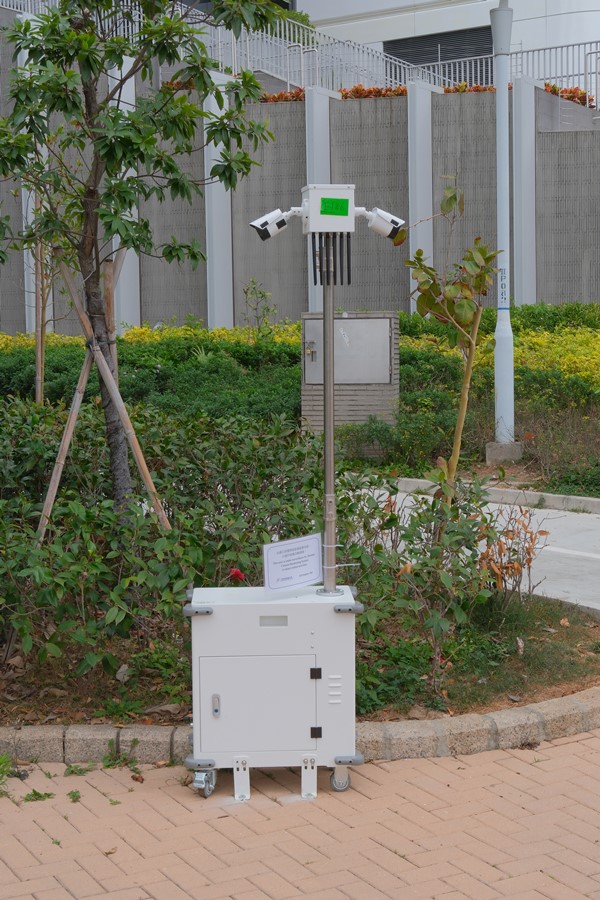
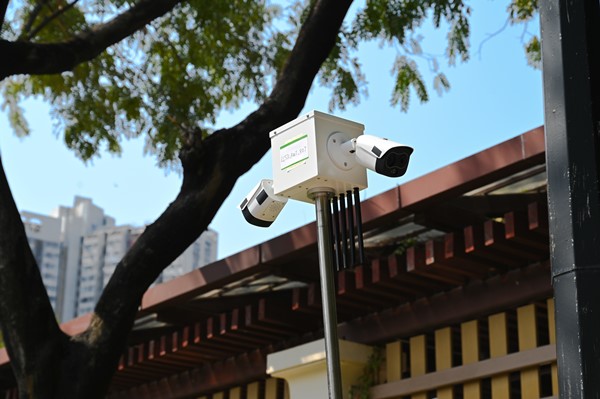
Thermal imaging cameras
As rodents are typically active at night, the Department has set up Overnight Rodent Control Teams (ORCTs) in all districts across the territory since July 2022, carrying out continuous and intensive rodent trapping work with the use of rodent traps in areas with more serious infestation in the small hours to enhance the effectiveness of rodent control. In 2024, a total of about 51,100 live rodents were caught by ORCTs and accounted for about 57% of the total number of live rodents caught.
In addition to performing routine rodent prevention and control duties, the Department encourages community participation in its efforts to control rodents through the annual territory-wide inter-departmental Anti-rodent Campaign and fully supports the "Cross-sectoral Territory-wide Anti-rodent Action" led by the Environment and Ecology Bureau. The Department had conducted strategic anti-rodent operations at 97 priority rodent black spots throughout the territory and eliminated around 65% of priority rodent black spots (a total of 63) in 2024, achieving the key performance indicator set out in the 2023 Policy Address. During the year, the Department handled a total of about 10,800 rodent infestation cases in various districts, issued about 90 written warnings, trapped about 89,600 live rodents, collected about 33,200 dead rodents. Additionally, about 16,700 rat holes were filled.
Anti-rodent Charter
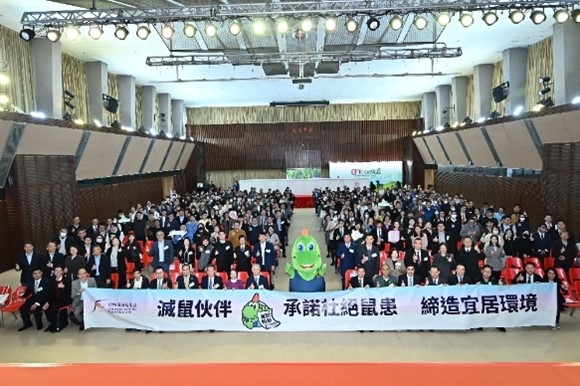
The Department has launched the “Anti-rodent Charter” for residential premises on 31 December 2024 to raise awareness on maintaining environmental hygiene and to cultivate good habits among residents in creating a rodent-free environment. All property management companies / owners' corporations / residents' organisations of private residential premises, the Hong Kong Housing Society, transitional housing, subsidised sale flats and Tenants Purchase Scheme estates may sign up to the Charter and become our partner. The participants are committed to implementing effective measures like assigning anti-rodent liaison ambassadors to coordinate anti-rodent efforts in their residential estates/buildings, carrying out regular inspections, arranging necessary repairs, maintenance, cleansing and refuse removal works, monitoring the service quality and performance of the hired pest control service contractors, and properly maintaining the relevant records of pest control works.
Management of vector-borne diseases
To guard Hong Kong against vector-borne diseases, such as malaria, dengue fever, Zika virus infection, Japanese encephalitis, chikungunya fever, plague, scrub typhus, urban typhus, spotted fever and hantavirus infection, the Department works with various government departments, such as the Department of Health, to put in place appropriate vector control measures as well as promptly initiate investigations once a disease is reported. In compliance with international health regulations, the Department has specifically set up a number of monitoring stations at the airport. In 2024, the Department conducted about 900 mosquito surveys. The monthly Gravidtrap Index for Aedes albopictus at the port was below 1.2 %, while the Rat-flea Index recorded in the Rat-flea Survey was zero.
In addition, regular communication between professionals from Guangdong, Hong Kong and Macao is maintained to share surveillance results at the Hong Kong-Zhuhai-Macao Bridge for better understanding of vector distribution in areas under the purview of the three parties.