The Centre for Food Safety (CFS), established in 2006, is tasked to enhance food safety regulation, in order to protect public health and raise public confidence in food safety. It comprises two divisions: Risk Management Division and Risk Assessment and Communication Division.
The Risk Management Division is the operational arm responsible for food safety assurance. Its duties include food surveillance, enforcement, management of food incidents (including investigation of food poisoning outbreaks at food premises), food import control, food export certification and arrangement, as well as conducting inspections and tests on live food animals. The Risk Assessment and Communication Division is the research and development arm responsible for conducting risk assessment, advising on food standards and providing food safety information for the public as well as the food industry.
Safety Control of Imported Food
As most of our food comes from outside Hong Kong, import control is an important part of the CFS' work.
The control process - comprising a pre-entry assurance system, checking of import documents and surveillance at import control points - mainly applies to certain categories of high-risk food, such as game, meat, poultry, eggs, milk and frozen confections.
With effect from 1 July 2024, the operating hours for fresh produce imported via the Hong Kong-Zhuhai-Macao Bridge is extended from eight hours to 16 hours (i.e. from 1pm to 5am the following day).
Statistics on Imported Food in 2024
| Applications approved for import licence for frozen/ chilled meat and poultry | 57,297 |
| Applications approved for import permission for game, meat, poultry and eggs | 1,327 |
| Applications approved for import permission for milk and milk products | 463 |
| Applications approved for import permission for frozen confections | 521 |
| Targeted inspections of food trucks at food control points | 13,212 |
Part of the day-to-day tasks of ensuring food safety involves close liaison with consulates, the Mainland and overseas food authorities, importers, the Customs and Excise Department and other relevant organisations.
Import control measures on Japanese food
In response to Japan’s plan to discharge nuclear-contaminated water from the Fukushima Nuclear Power Station, the Hong Kong Government has prohibited the import of all aquatic products from 10 Japanese metropolis or prefectures, namely Tokyo, Fukushima, Ibaraki, Miyagi, Chiba, Gunma, Tochigi, Niigata, Nagano, and Saitama, if they are harvested, manufactured, processed, or packed on or after August 24, 2023. For other Japanese aquatic products, sea salt, and seaweed that are not prohibited from being imported into Hong Kong, the CFS conducts thorough radiological tests to ensure the radiation levels meet safety guidelines before allowing them into the market.
Additionally, vegetables, fruits, milk, milk beverages, and dried milk from Fukushima are banned, while those from nearby prefectures, i.e. Ibaraki, Tochigi, Chiba, and Gunma, are allowed only with radiation and exporter certificates issued by the Japanese authorities. Chilled or frozen game, meat, poultry, and poultry eggs from the above five prefectures can also be imported under similar certification conditions, ensuring the radiation levels comply with the Codex Alimentarius Commission guidelines.
In 2024, in addition to the Food Surveillance Programme, over 85,000 samples of imported Japanese food products were taken for radiation testing.None of the tested samples have exceeded the radiation levels of the Codex guideline levels. The CFS will continue its gatekeeping role at the import level and enhance testing for imported Japanese food products in order to safeguard food safety and public health.
With the view to enabling members of the public to have a better grasp of the latest safety information on imported Japanese food products, since the commencement of the discharge on August 24, 2023, the Environment and Ecology Bureau (EEB) has been making public announcements every working day regarding the radiological testing results of the imported food from Japan.
Further, the CFS has been maintaining close liaison with the relevant local trades, including importers of Japanese food products and catering operators, to keep them informed about the latest position of the discharge plan and the possible import control measures which the Government may implement to safeguard food safety. The CFS will continue to engage with the trade and relevant stakeholders to explain the latest import control measures on Japanese food.
Food Export Certification and Arrangement
The CFS is the competent authority in Hong Kong responsible for issuing two key export certificates. The "Health Certificate for Foods of Animal Origin" assists local food manufacturers exporting foods containing ingredients of animal origin in meeting the veterinary health requirements of imports imposed by other countries or places, while the "Food Inspection Certificate" facilitates the export of locally manufactured or processed food products to foreign countries or places.
Following the signing of a cooperation agreement between the EEB and the General Administration of Customs of the People’s Republic of China (GACC) in November 2023, the Advance Release Arrangement (ARA) was established by the CFS in May 2024 for eligible Hong Kong manufactured food products to shorten the time for customs clearance and further enhancing the safety of local food products exported to the Mainland, facilitating trade, and promoting the development of local food manufacturing industry. Under the ARA, food products subject to testing by the Mainland Customs can be released upon completion of sampling, without waiting for the results.
The ARA covers three major categories of food, namely (1) beverages and frozen drinks (excluding alcoholic and milk beverages); (2) biscuits, pastries and bread; and (3) candies and chocolates (including chocolate, cocoa butter substitute chocolate and their products), and is available at the ports under the Shenzhen Customs, Gongbei Customs and Huangpu Customs.
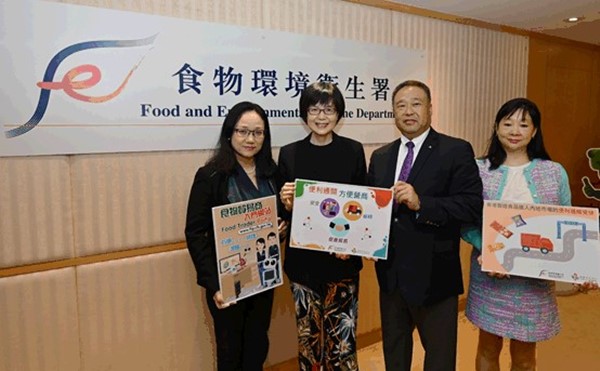
Advance Release Arrangement for Hong Kong-manufactured food products entering the Mainland market commences.
Food Surveillance and Handling Food Complaints
Continuous monitoring, testing and law enforcement by the CFS are keys to ensuring the safety of Hong Kong’s food supplies. Food samples are tested by the CFS at every stage in the supply process: from import and manufacture to wholesale and retail.
In 2024, the CFS tested about 66,900 samples of food, about nine samples for every 1,000 people in Hong Kong.
Food samples undergo microbiological examinations, chemical analyses and radiation level tests for the CFS to assess their conformity to legal standards and labelling requirements.
The Man Kam To Food Laboratory provides expeditious and comprehensive testing services for agricultural produce imported mainly from the Mainland. The testing services are:
-
Analysis of pesticide residues in fresh vegetables and fruits. The tests cover isocarbophos, methamidophos and other organophosphorous pesticides, N-methyl carbamates and pyrethroids.
-
Analysis of pesticide residues in cereal and grains. The tests cover isocarbophos, methamidophos and other organophosphorous pesticides, N-methyl carbamates and pyrethroids.
-
Analysis of veterinary drug residues in raw milk and melamine in food. The tests cover aminoglycosides, beta-lactams, chloramphenicol, ceftiofur, lincomycin, macrolides, polypeptides, quinolones, sulfonamides, synthetic hormones, tetracyclines and trimethoprim.
Enforcement actions are taken by the CFS against unsatisfactory surveillance results. Apart from assessing the risk of specific foods and formulating food safety strategies, the CFS also reviews and analyses regularly data collected through the Food Surveillance Programme for its topical studies.
In 2024, a total of 7,912 food complaints were handled by FEHD.
Statistics on the Food Surveillance Programme in 2024
(A) Testing of food samples
| Testing | Number of samples# | Number of satisfactory samples |
|---|---|---|
| Chemical | 44,354 | 44,281 (99.8%) |
| Microbiological | 18,177 | 18,140 (99.8%) |
| Radiation level | 4,365 | 4,365 (100%) |
# Excluding 85,490 samples of imported Japanese food tested for radiation level in 2024.
(B) Enforcement of food labelling
| Food labels inspected | 55,365 |
| Prosecutions taken out | 193 |
(C) Antimicrobial Resistance Surveillance Programme on Food
The Government launched the "Hong Kong Strategy and Action Plan on Antimicrobial Resistance (2023-2027)" (Action Plan) to provide a list of actions and activities to contain the growing threat of antimicrobial resistance (AMR) in Hong Kong. The CFS has been conducting a routine surveillance programme on AMR in food since January 2022. More than 1,200 food samples including raw meat and ready-to-eat food have been collected at retail level for testing in 2024.
Management of Food Incidents
The CFS monitors food incidents, both local and overseas, on a daily basis. Around 5,300 food incidents were identified through the Food Incident Surveillance System (FISS) during the year. The CFS will consider various factors such as risk to consumers, local regulations and availability of the concerned food product to decide on the most appropriate risk management actions.
Besides, the CFS actively communicates with related health authorities, importers, distributors and retailers on food incidents. If necessary, the CFS will take actions such as requesting the trade to halt sales, conducting tests as and when appropriate, warning the trade concerned and directing recall of the products in question. The CFS will issue rapid alerts to traders to provide updates on the latest situation, and press releases to give advice to consumers if the food incidents are of public health concern to the local population. "Food Incident Post" might also be issued on the CFS website if it is anticipated that related food products might be acquired through e-trade, travel, or other personal channels. A total of 56 trade alerts, 58 press releases on food incidents and 435 food incident posts were issued by the CFS in 2024.
Staffed by doctors and nurses, the Food Incidents Response and Management Unit of the Risk Management Section, in collaboration with the Centre for Health Protection, investigates outbreaks of food poisoning and food-borne infectious diseases at food premises, identifies the contributing factors and assists in tracing the sources of suspected food. The unit also educates the food handlers about food, personal and environmental hygiene. A total of 258 visits cum investigations to food premises involved in food incidents were conducted by the unit in 2024. The most commonly implicated causative agents in food poisoning outbreaks related to food premises were Norovirus, Salmonella and Vibrio parahaemolyticus. The three most frequently identified contributing factors, in descending order, were consuming raw food, contamination by dirty utensils and undercooked food.
Implementation of Food Safety Ordinance
The Food Safety Ordinance (Chapter 612) (the Ordinance) provides a food tracing mechanism to help the Government trace the source of the food more effectively and take prompt action when dealing with food incidents. Food importers and distributors have to register with the Department, unless they have already registered or obtained a licence under other ordinances listed at Schedule 1 to the Ordinance. By the end of 2024, there were 11,771 registered food importers and 9,817 registered food distributors. The Ordinance also empowers the Director of Food and Environmental Hygiene to issue food safety orders prohibiting the import and supply of problematic food and mandating its recall of such food when necessary.
Food Trader Portal
The Food Trader Portal (FTP) is a one-stop electronic communication platform between the CFS and food traders. Through FTP, food traders can, by electronic means, complete or renew registration as food importers or distributors, submit applications for import licences/permissions or food export certificates, report arrival of imported food consignments and submit applications for recommendations on food manufacturer registration. The CFS can also make use of FTP to collect and disseminate information to food importers at various stages of import of food consignments.
With the commencement of the Advance Release Arrangement, an online application service was also launched on the FTP to assist local manufacturers in exporting three specified categories of food products to the Mainland.
Food Safety Control of Live Food Animals
The Veterinary Public Health Section (VPHS) and the Slaughterhouse (Veterinary) Section are mainly responsible for import control of live food animals and conducting surveillance programmes on veterinary drug residues and diseases with public health significance in relation to live food animals.
Implementing the concept of "from farm to table", veterinary staff members visit registered farms exporting to Hong Kong to understand their husbandry practices. In 2024, a mixed mode of on-site inspections for some farms and document assessments for other farms was continually adopted to monitor the latest situation of 56 registered and associated farms, as well as 41 processing plants in the Mainland were inspected under this mixed mode. These included farms of poultry, pig, cattle, goat and aquatic food animals.
Number of local and imported food animals inspected in 2024
| Type of animal | No. of animals inspected (inspected in slaughterhouse) | No. of animal health certificates verified |
|---|---|---|
| Pigs |
1,124,547 |
26,625 health certificates for imported pigs and |
| Cattle |
9,153 |
995 health certificates |
| Goats |
769 |
7 health certificates |
The Public Health (Animals and Birds) (Chemical Residues) Regulation (Cap 139N) prohibits the use of certain chemicals, including clenbuterol, and restricts the residue levels of a number of chemicals in food animals. In 2024, 29,068 samples were collected by the CFS from food animals for testing of veterinary drug residues. During the same year, no pig urine sample was tested positive for prohibited chemicals. One tissue sample was tested positive for restricted chemicals.
The Quarantine Detector Dog Unit assists in interdicting illegal import of raw meat and eggs by inbound persons at all land boundary control points. The unit serves to safeguard public health by preventing the import of meat and eggs from unknown sources into Hong Kong. There are seven quarantine detector dogs in the unit.
For the export of food products of animal origin, 1,599 veterinary health certificates were issued by the CFS in 2024. They covered products such as ice cream, mooncakes, Chinese dim sum, milk beverages, instant noodles, fishery products and bakery wares and Chinese pastries, which were exported to the Mainland, Macao, Australia, Canada, New Zealand, the UK and the USA.
Risk Assessment
In a risk-based food safety control model, risk assessment forms the scientific basis of risk management and risk communication. It includes systematic estimation and evaluation of the likelihood and severity of the adverse health effects resulting from exposure to food-borne hazards based on the best available scientific evidence. A typical risk assessment consists of four steps - hazard identification, hazard characterisation, exposure assessment and risk characterisation.
The CFS' risk assessment work mainly consists of researches, projects and literature studies. In December, the CFS released the first report on sulphites under the Second Hong Kong Total Diet Study (2nd HKTDS). The 2nd HKTDS aims to estimate the latest dietary exposure of the Hong Kong population and various subgroups to a range of chemical substances of potential food safety concern, and in turn assess the associated health risks. Reports of other groups of chemical substances will be released in phases in 2025 and 2026.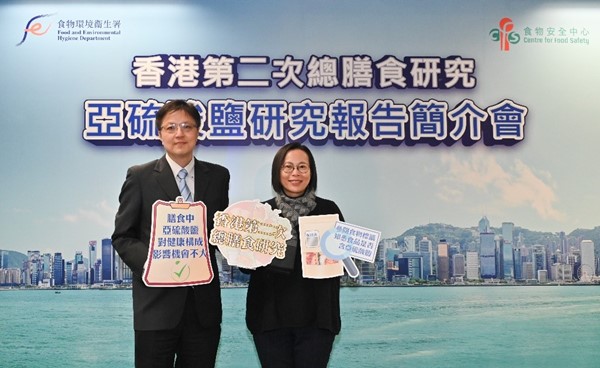
The CFS also released the results of a risk assessment project titled "Microbiological Quality of Packaged Rice Balls" in December 2024.
Nutrition Labelling
In order to help the trade and laboratory service providers understand and comply with the nutrition labelling requirements under the Food and Drugs (Composition and Labelling) Regulations (Cap 132W), the CFS provides online resources (including technical guidance notes, trade guidelines, frequently asked questions, Nutrition Label Calculator), telephone hotline and helpdesk service for traders. Besides, the CFS organises publicity programmes relating to nutrition labels for various sectors of the community through different means including social media platform.
Nutrient Information Inquiry System
The Nutrient Information Inquiry System (NIIS) is a web-based searchable database containing nutrient data of commonly consumed food items which are of relevance and interest to our local community. It is available free of charge with two functions: a Food Nutrient Finder (with function to browse and search for information about a specific food or nutrient) and a Food Nutrient Calculator (with function to calculate the total nutrient quantity of selected food items using the available data from NIIS).
Food Standards
Setting food standards is an integral part of risk management in food safety. In setting new local food standards, the CFS takes reference from international food standards established by the Codex Alimentarius Commission, scientific evaluations performed by internationally recognised authorities such as the World Health Organization (WHO), the Joint Food and Agriculture Organization (FAO) of the United Nations/ WHO Expert Committee on Food Additives (JECFA) and the Joint FAO/ WHO Meeting on Pesticide Residues (JMPR), as well as practices in other jurisdictions.
The Preservatives in Food (Amendment) Regulation 2024 (the Amendment Regulation), which stipulates the updated standards for preservatives and antioxidants in food, was gazetted on 10 October and passed by the Legislative Council in November. The Amendment Regulation aims at keeping local food safety standards on a par with international standards, enhancing consumer protection and facilitating the food trade. The Amendment Regulation came into operation on 30 December. The commencement is followed by a 24-month transitional period which will end on 29 December 2026. The Government has also started the legislative review of the Food Adulteration (Metallic Contamination) Regulations, with a public consultation launched in December 2024.
Risk Communication
Effective communication with stakeholders, as well as tripartite collaboration among the food trade, the public and the Government, are vital in upholding food safety in Hong Kong. There is a dedicated Communication Resource Unit (CRU) under the CFS to provide information on food safety risks for the public and the food trade. During the year, apart from making available on-loan teaching kits, exhibition boards and audio-visual resources, the CRU also conducted 184 educational talks and 52 roving exhibitions. The CFS also regularly conducts Trade Consultation Forum that allows the Centre and the food trade to exchange views on food safety matters and control measures throughout the year.
The CFS has launched two thematic websites for the public and trade, named "Safe Food for All" (cfs.gov.hk/safefood) and "Safe Kitchen" (cfs.gov.hk/safekitchen) respectively, to actively promote the "Five Keys to Food Safety" and the adoption of "Good Hygiene Practices", which are scientifically proven measures to reduce the incidence of foodborne diseases. The websites provide a convenient one-stop access to educational and training materials, with images and short videos to explain the concepts in an easy-to-understand approach.
The CFS started its year-round Food Safety Day 2024 campaign in June under the theme "The Jianghu of Cooking: Need to Keep Bacteria at Bay? Safe Temperature is the Way!" to highlight the significance of proper temperature control in safeguarding food safety, as improper food storage temperature is one of the most common contributing factors in food poisoning outbreaks. The campaign aims to remind food businesses and the public to adhere to correct food safety practices, including keeping hot food above 60°C, cold food at or below 4°C, and thoroughly reheating cooked food to reduce the risk of foodborne illnesses. Various educational and promotional activities including a designated webpage, social media posts, press releases, posters, market banners, and an online video were launched to raise awareness of the food trade and the public on proper food safety practices, including to maintain proper hot and cold holding temperatures for prepared foods, to prevent foodborne illnesses.

The Risk Communication Section has also implemented several strategies to keep the public and the trade informed of food safety issues in a timely and proactive manner. Examples are the "Rapid Alert System" that can promptly deliver messages to the food trade explaining food incidents, the monthly electronic publication "Food Safety Focus" posted on the CFS website and the quarterly publications of "Food Safety Bulletin" and "Food Safety Express" which target the general public and the trade respectively.
Summary of Risk Communication Activities in 2024
| Item | 2024 figures |
|---|---|
| No. of educational/publicity programmes organised | 10 |
| No. of resource materials produced | 70 |
| Total attendance at public education/communication activities | 79,209 |
| No. of public enquiries handled | 4,773 |
| No. of Hazard Analysis and Critical Control Point (HACCP) seminars/workshops | 33 |
| No. of followers/subscribers on CFS' social media platforms | 52,681 |
| No. of e-news issued | 24 |
| Seasonal Food Surveillance |
|---|
| Lunar New Year food |
| Rice dumplings |
| Mooncakes |
| Hairy crabs |
| Lap-mei |
| Poon choi |
| Targeted Food Surveillance |
|---|
| Summer Food Surveillance (including Vibrio parahaemolyticus, Salmonella, Coagulase-positive staphylococci organisms, Listeria monocytogenes, Bacillus cereus and Clostridium perfringens in Ready-to-eat Food) |
| Sulphur dioxide in meat |
| Hot pot food and soup base |
| Nutrition Labelling |
The CFS devises promotional programmes for specific trade sectors, including "poon choi" suppliers, caterers for elderly homes, schools and child-care centres, and food premises selling siu mei, supplying lunch boxes, raw oysters, and frozen confections. Workshops and seminars are organised for the staff and training materials are provided.
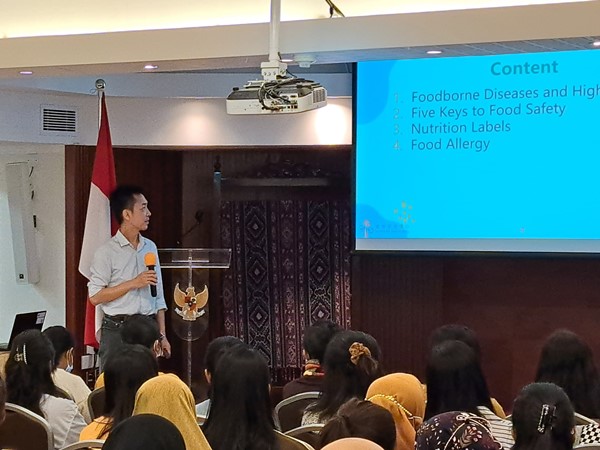
The Centre for Food Safety held a talk on food safety for domestic helpers at the Consulate General of the Republic of Indonesia in Hong Kong on May 21.

The Centre for Food Safety organised online talks which focused on food safety risks at schools for primary and secondary schools as well as the food trade on July 5 and 11.
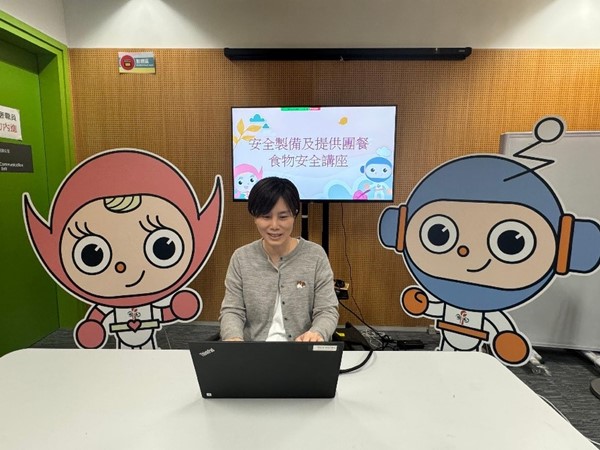
The Centre for Food Safety collaborated with the Travel Industry Authority to host an online health talk for tour group catering service providers to provide advice on safe food preparation on September 13.

The Centre for Food Safety organised online talks for primary and secondary schools, focusing on food safety risks at schools, on October 8 and 16.
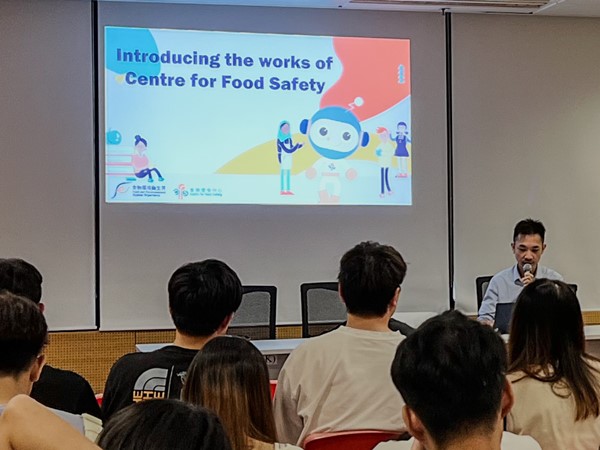
The Centre for Food Safety held a talk for undergraduate students of the Chinese University of Hong Kong majoring Public Health to introduce its works on October 14.
World Health Organization Collaborating Centre
The CFS has been designated as a World Health Organization Collaborating Centre (WHOCC) for Risk Analysis of Chemicals in Food since October 2010 and was last redesignated in October 2022 for four years till 2026. As a WHOCC, the CFS continues to contribute to the WHO's work on public health, especially in relation to food safety in the region, and supports WHO's activities in the designated areas.